Chief Economist
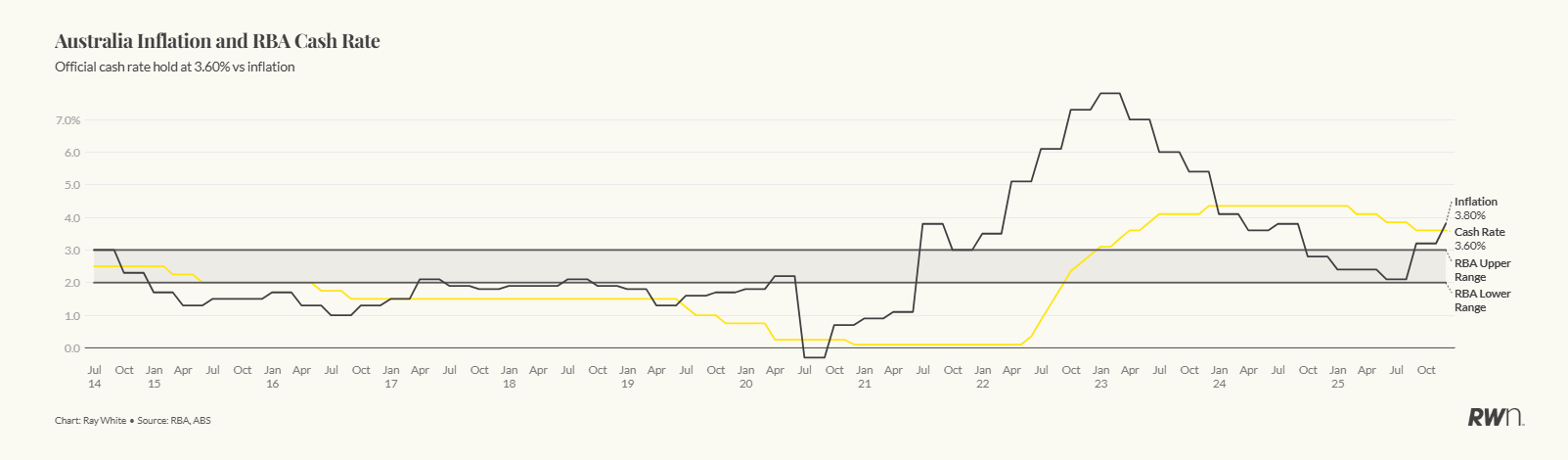
The Reserve Bank has held the cash rate steady today, maintaining a cautious stance as inflation continues to prove more persistent than expected. While broader economic momentum is softening, the RBA remains focused on services inflation, and in particular, housing costs, which are continuing to keep overall inflation elevated.
The challenge for policymakers is that the most stubborn sources of inflation are now the least responsive to interest rate increases. Rents remain high due to a lack of rental housing. Construction costs are easing only gradually as labour and materials constraints continue to affect new housing delivery. Utilities and insurance, which have been major contributors to household cost pressures, are driven largely by structural and regulatory factors, not consumer demand.
Source : RBA, ABS
This creates a policy paradox. Keeping rates high weighs on household spending and business investment, helping slow demand. But these same restrictive conditions are holding back residential construction and discouraging new rental supply, reinforcing the very housing inflation the RBA is trying to control.
The labour market, while softening, continues to hold up better than expected. Job vacancies have come down from their peaks, but unemployment remains near levels consistent with full employment. With housing and services inflation still elevated and wage growth yet to clearly ease, the RBA appears content to keep policy tight for longer.
For households, today’s decision means mortgage repayments remain unchanged, but relief is not yet approaching. Rate cuts are still a possibility in 2026, however expectations have shifted further out. A move earlier in the year now looks unlikely, with any easing more realistically confined to the second half, once inflation shows durable progress back toward the target band.
Australia’s housing market continues to be supported by strong fundamentals: rising population, persistent undersupply and constrained construction pipelines. Those conditions point to ongoing upward pressure on rents and prices, even as higher borrowing costs limit purchase capacity for some buyers.
Today’s hold reflects a central bank balancing slower demand against stubborn inflation, and emphasises that a longer period at current interest rate settings is now the most likely path.
Article Source : Click Here