Nerida Conisbee
Ray White Group
Chief Economist
For decades, Australia’s coastal regions have been the darlings of the property market, with sun-soaked beaches and ocean views driving prices skyward. But a quiet revolution is taking place in the country’s interior. What’s driving this inland boom, and which areas are emerging as the new hotspots?
Over the past decade, the Gold Coast has been the strongest regional growth area in Australia, with all top performing areas being located in either the Gold Coast or Sunshine Coast. The top performer has been the Mermaid Beach-Broadbeach area where the median has increased from $1.1 million to $2.5 million.
While there is no inland regional area that has seen an increase so marked over the past decade, there are many areas that have more than doubled and the majority of them are in regional inland New South Wales and Victoria. The strongest inland regional area over the past 10 years has been the Southern Highlands in regional New South Wales. Bowral tops the list with an increase of $1 million over the past decade. The Victorian spa country also features with Woodend and Daylesford seeing increases in excess of $460,000.
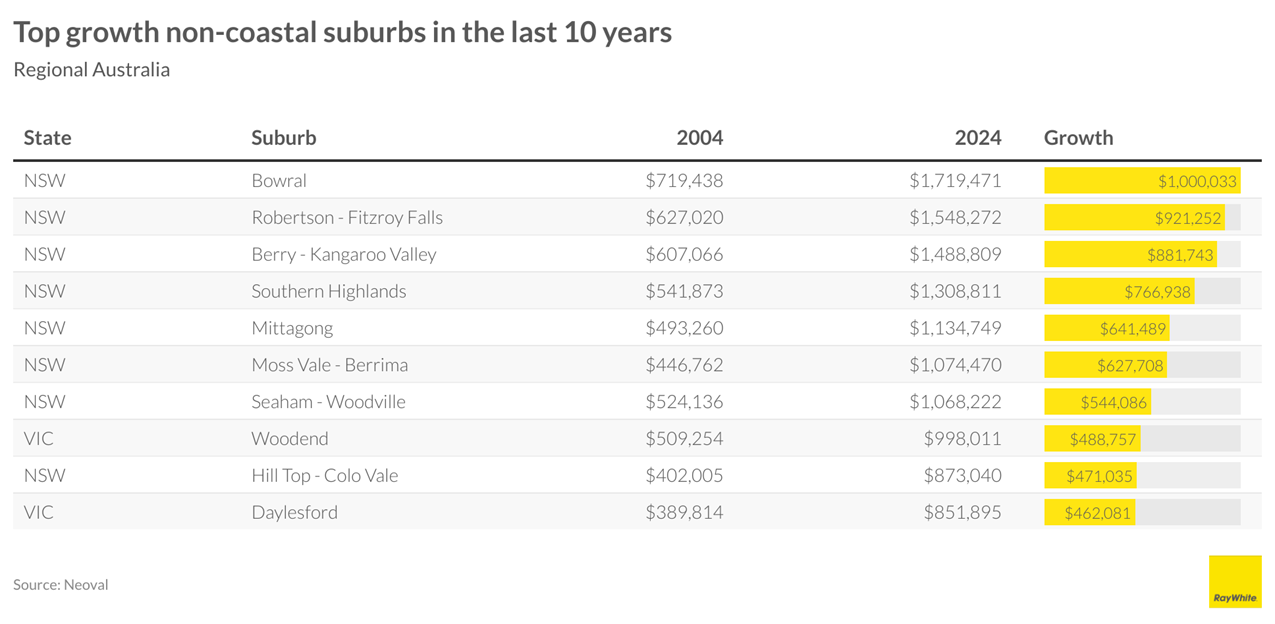
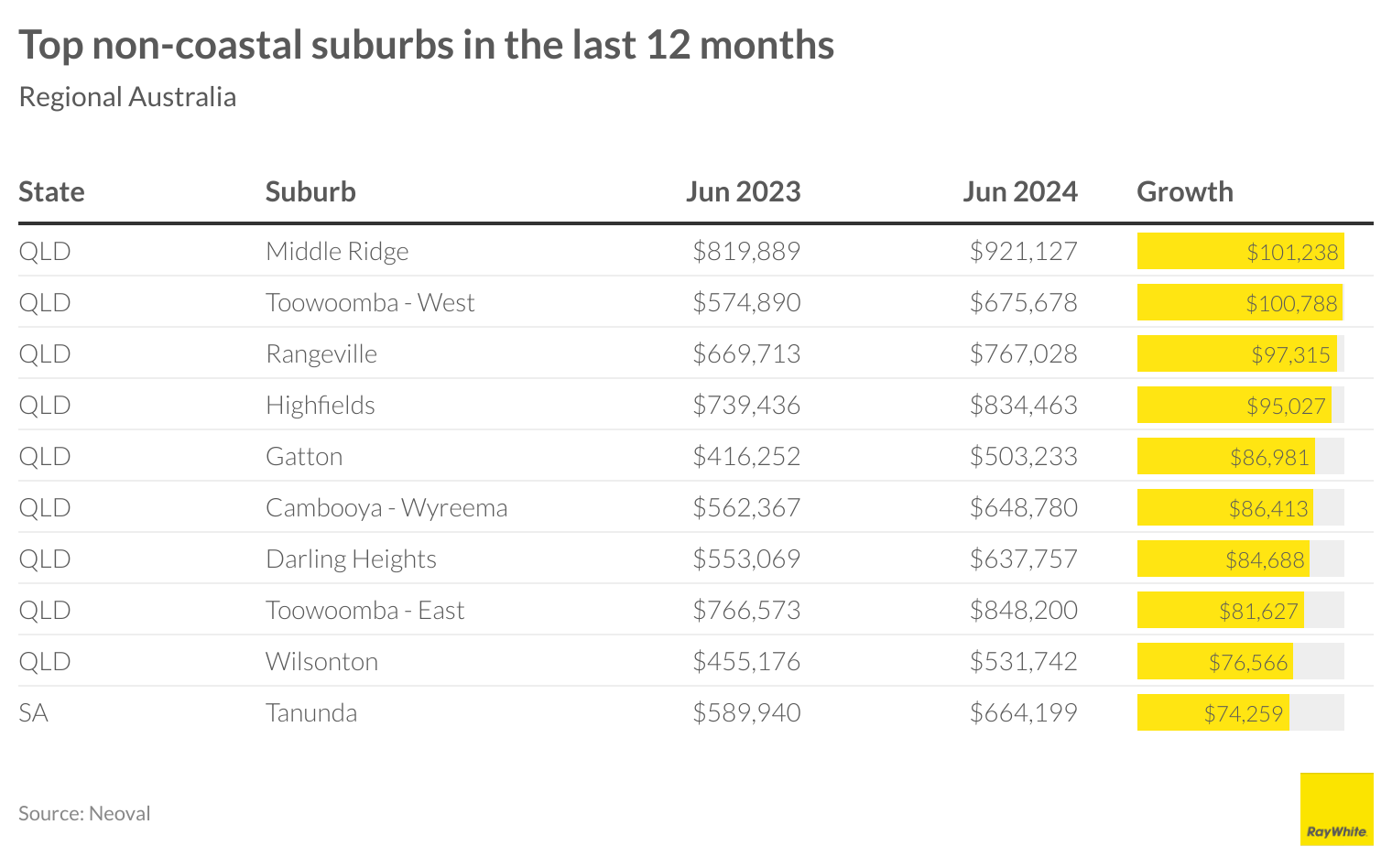
While the Southern Highlands and Victorian spa country have topped the list over the long term, Toowoomba and surrounding areas account for nine of the top 10 growth areas over the past year.
Middle Ridge in Toowoomba has seen price growth of just over $100,000 over the past year and is now getting close to a million dollar median. While it has taken a bit longer for Toowoomba to see strong price growth similar to Brisbane, Sunshine Coast and Gold Coast, it appears that this is now occurring. The only suburb far from Toowoomba on the list is Tanunda in South Australia’s Barossa. The median has increased by just under $75,000 over the past year.
What has been driving prices in these areas? Overwhelmingly, the top inland performers are relatively close to capital cities. This makes it possible to commute to a larger city for work if required. Most of them have a large number of older historic homes and are attractive leafy suburbs with a high level of amenity, similar characteristics to many capital city suburbs that have seen very strong growth over a prolonged period.
Download charts and image of Ms Conisbee here
Media contact
Nerida Conisbee
Ray White Group
Chief Economist
nconisbee@raywhite.com
0439 395 102
Article Source